

Chicago Botanic Garden
Shoreline Restoration Master Plan
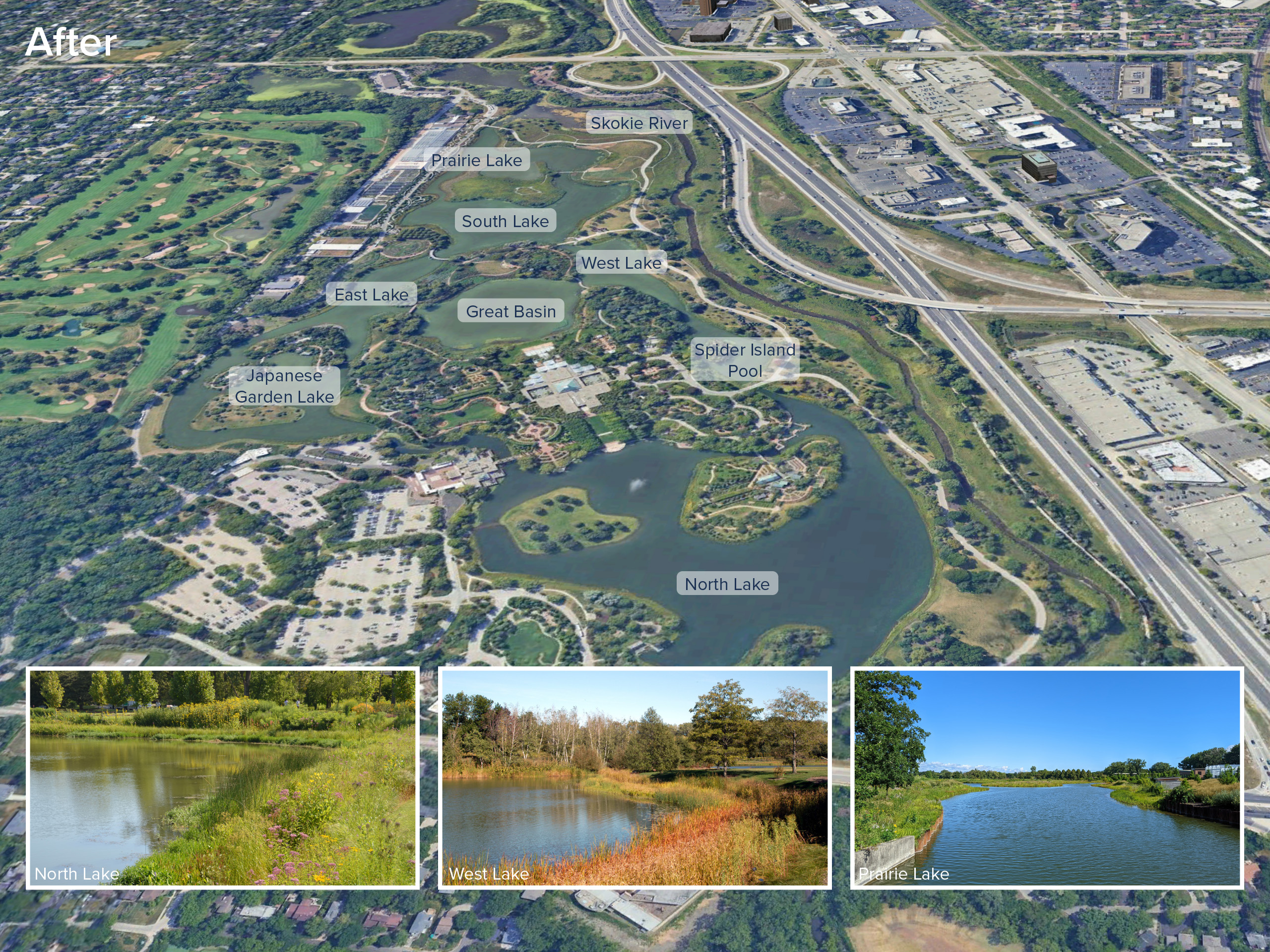
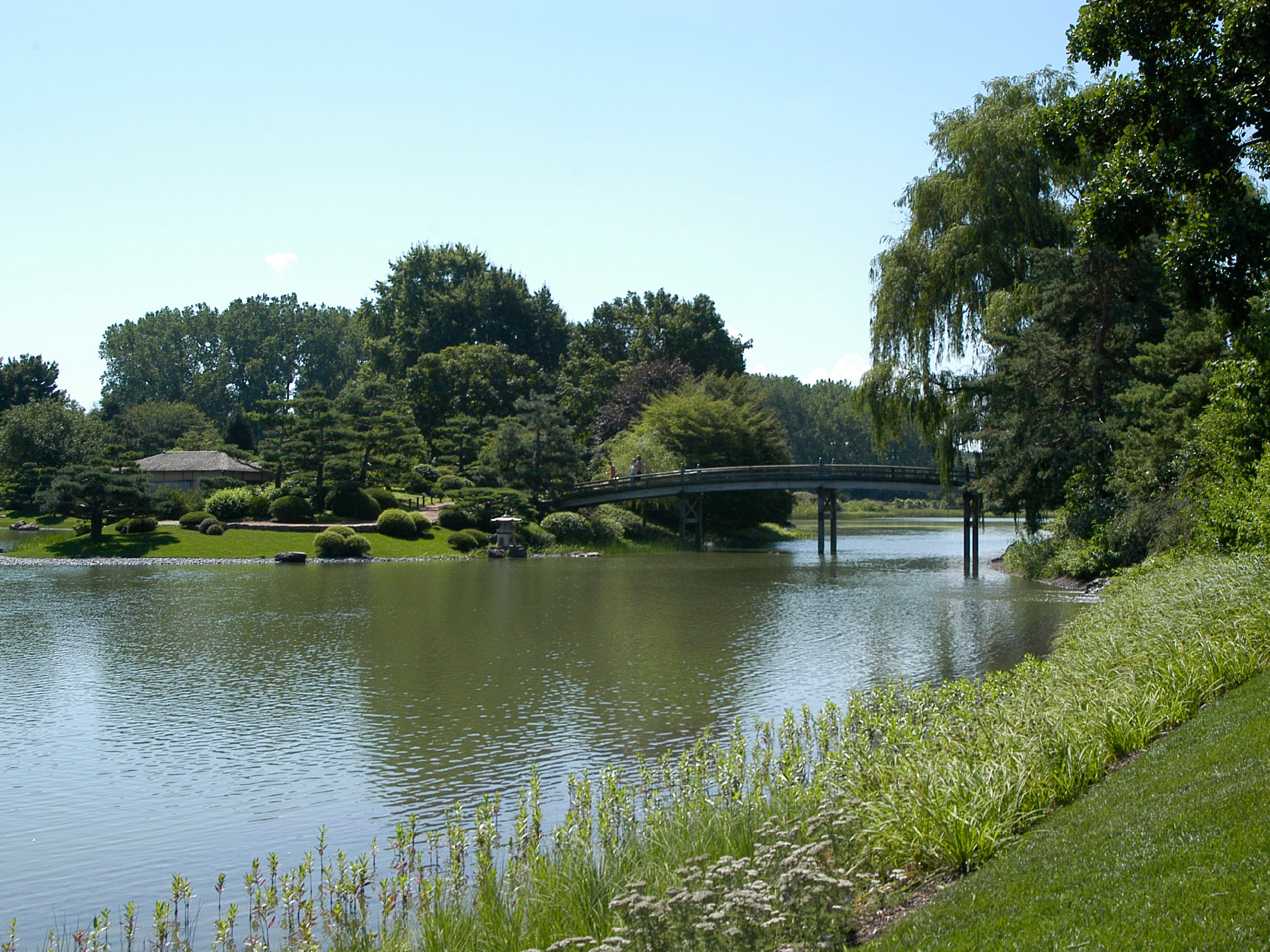
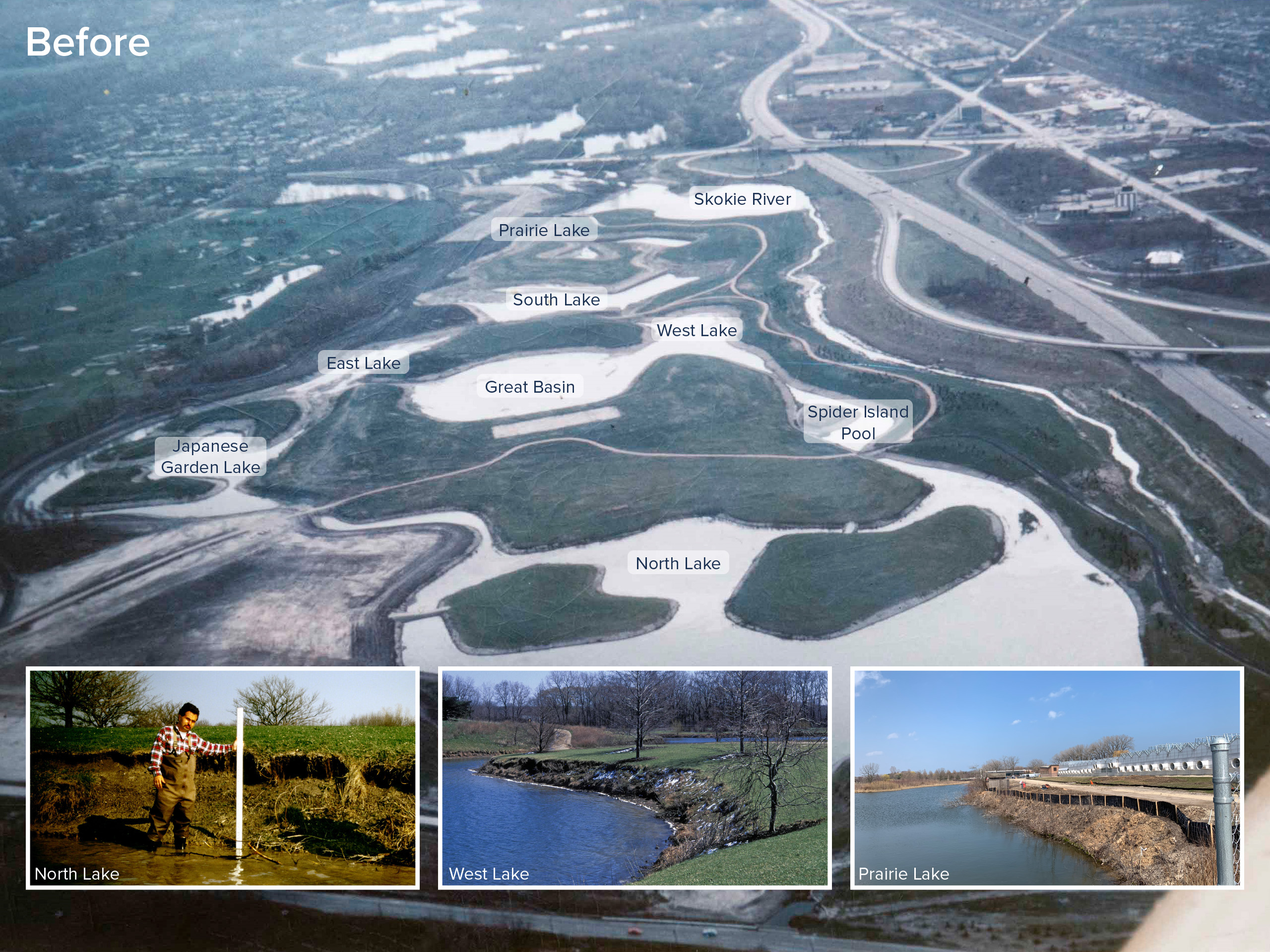
Originally designed by John Ormsbee Simonds and Geoffrey Rausch, the Chicago Botanic Garden was modeled on a famous Chinese Garden called The Garden of Perfect Brightness (Yuanmingyuan in Beijing). The site framework included 5.7 miles of lake shoreline and 60 acres of lake surface surrounding nine islands and was constructed in the late 1960’s out of swampy ground within the Skokie River floodplain.
Over the next two decades, the Garden made significant capital improvements on this Forest Preserves of Cook County land holding. During this same time frame, the surrounding watershed also experienced extreme development, increasing the amount of flood pressure the Garden’s newly created lakes and shorelines had to withstand. The Garden now hosts nearly one million visitors annually to visit impressive display gardens and natural areas, as well as attend classes and events. The Garden’s staff are renowned in their fields with a focus on ecological conservation and education and the facility serves as a living learning landscape.
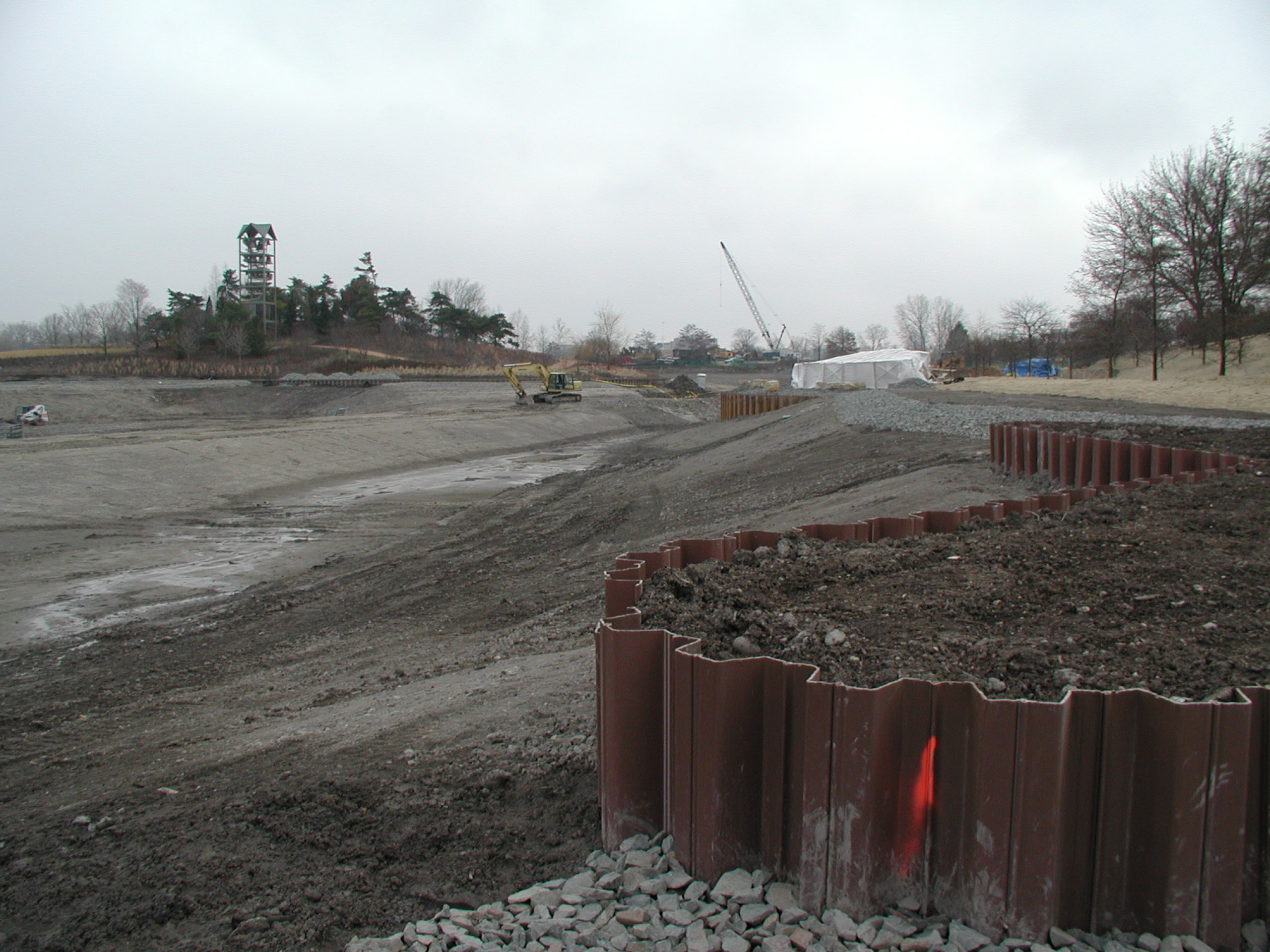
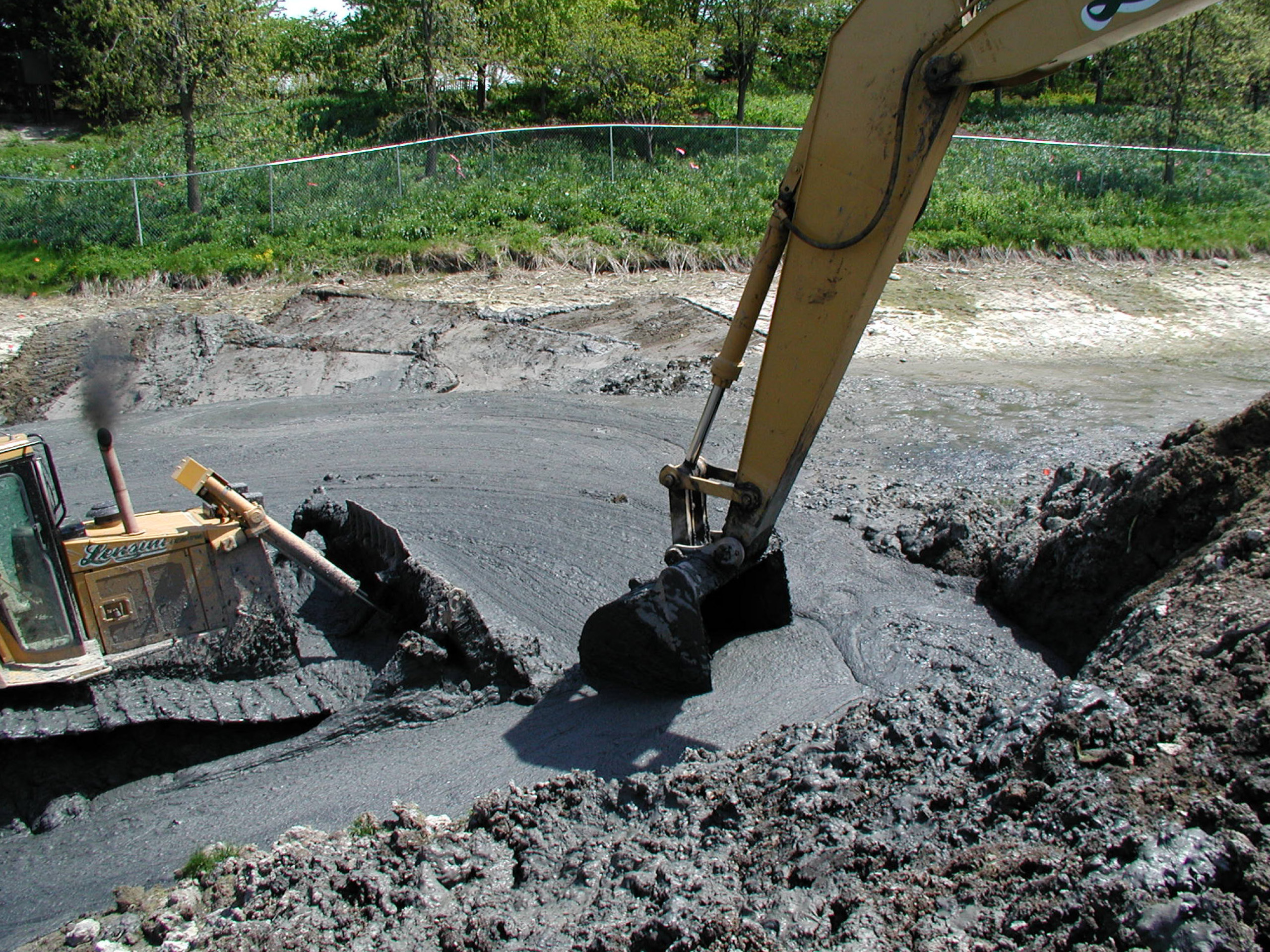
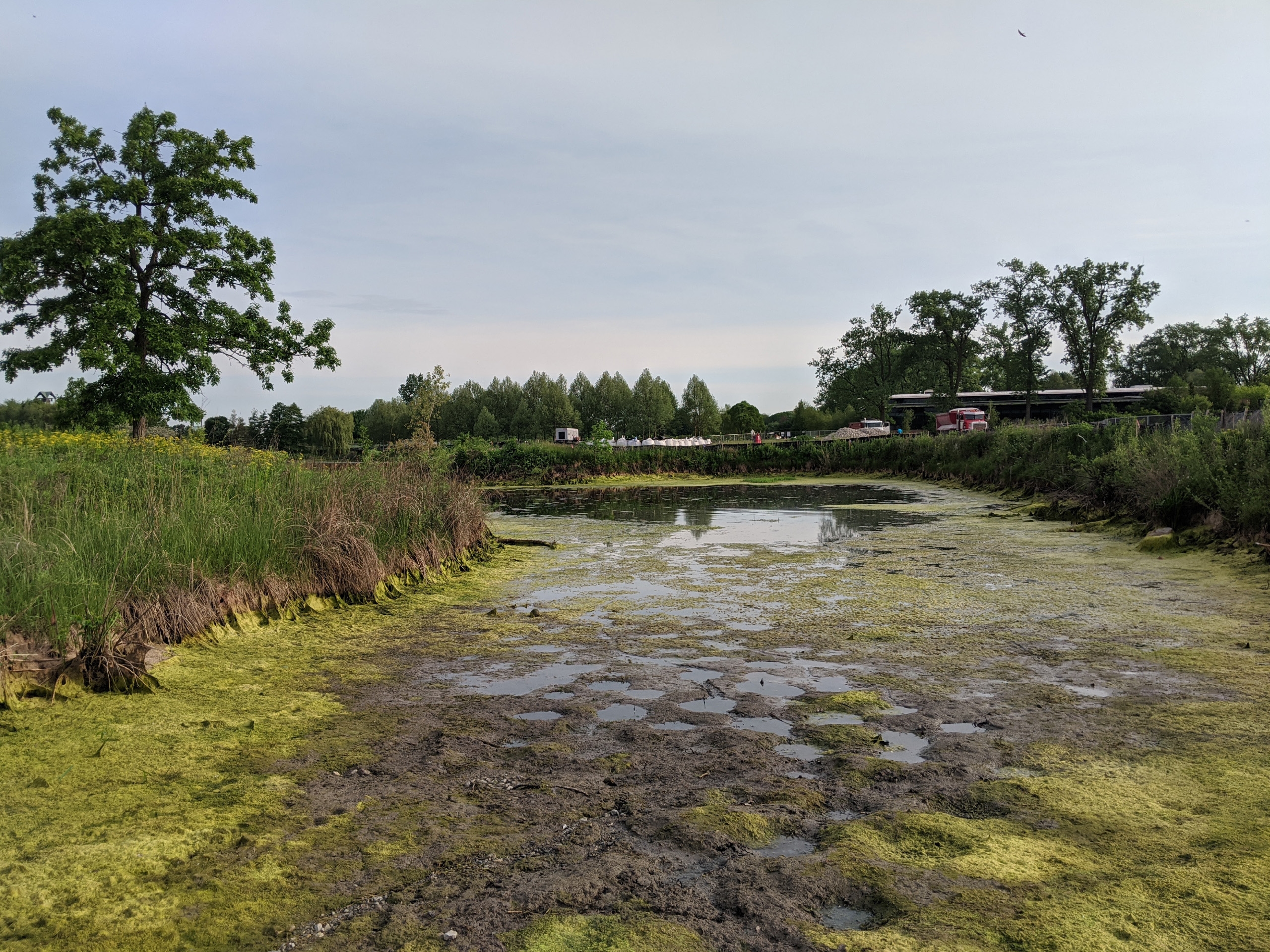
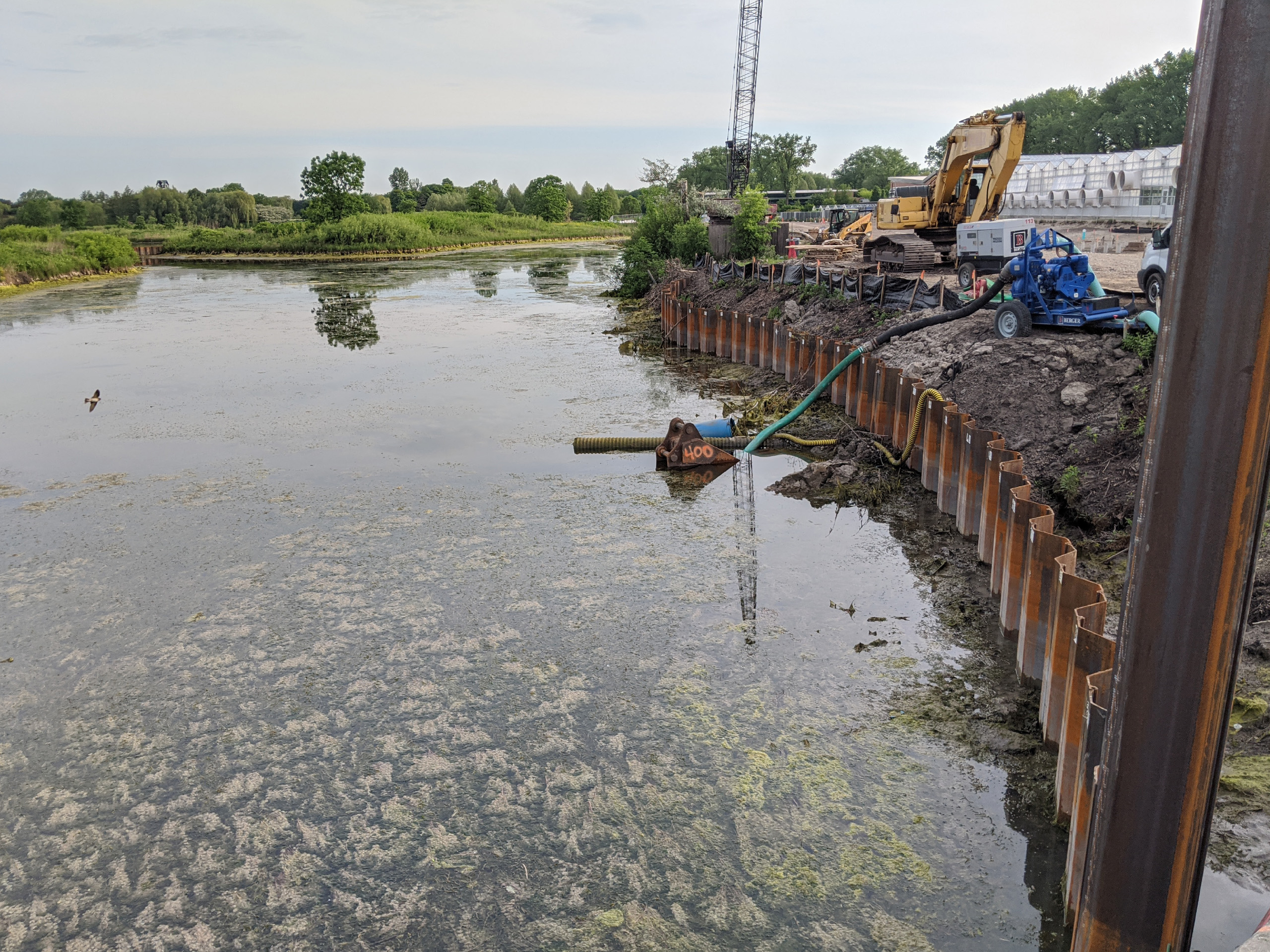
In 1999, the Chicago Botanic Garden launched an Aquatics Initiative targeted to address extensive shoreline erosion that had resulted from three decades of flooding pressures on its lake shores, and extremely poor water quality due to this erosion and other urban pollution. The degradation of the Garden’s lakes and shorelines was broadly threatening valuable existing infrastructure and exterior horticultural displays. It was also massively downgrading the visitor experience and the Garden’s reputation as a protector of the natural environment.
The Chicago Botanic Garden committed itself to become a model of best practice for the region, which broadly needed this information and real-world experience to apply to many degraded urban ponds and lakes. Several early projects were launched directly out of the Aquatics Initiative, but a cohesive plan was needed to offer schematic design solutions, offer budgetary pricing, and prioritize several discrete, phased projects. These projects would be implemented over many years’ time through project-specific fundraising initiatives.
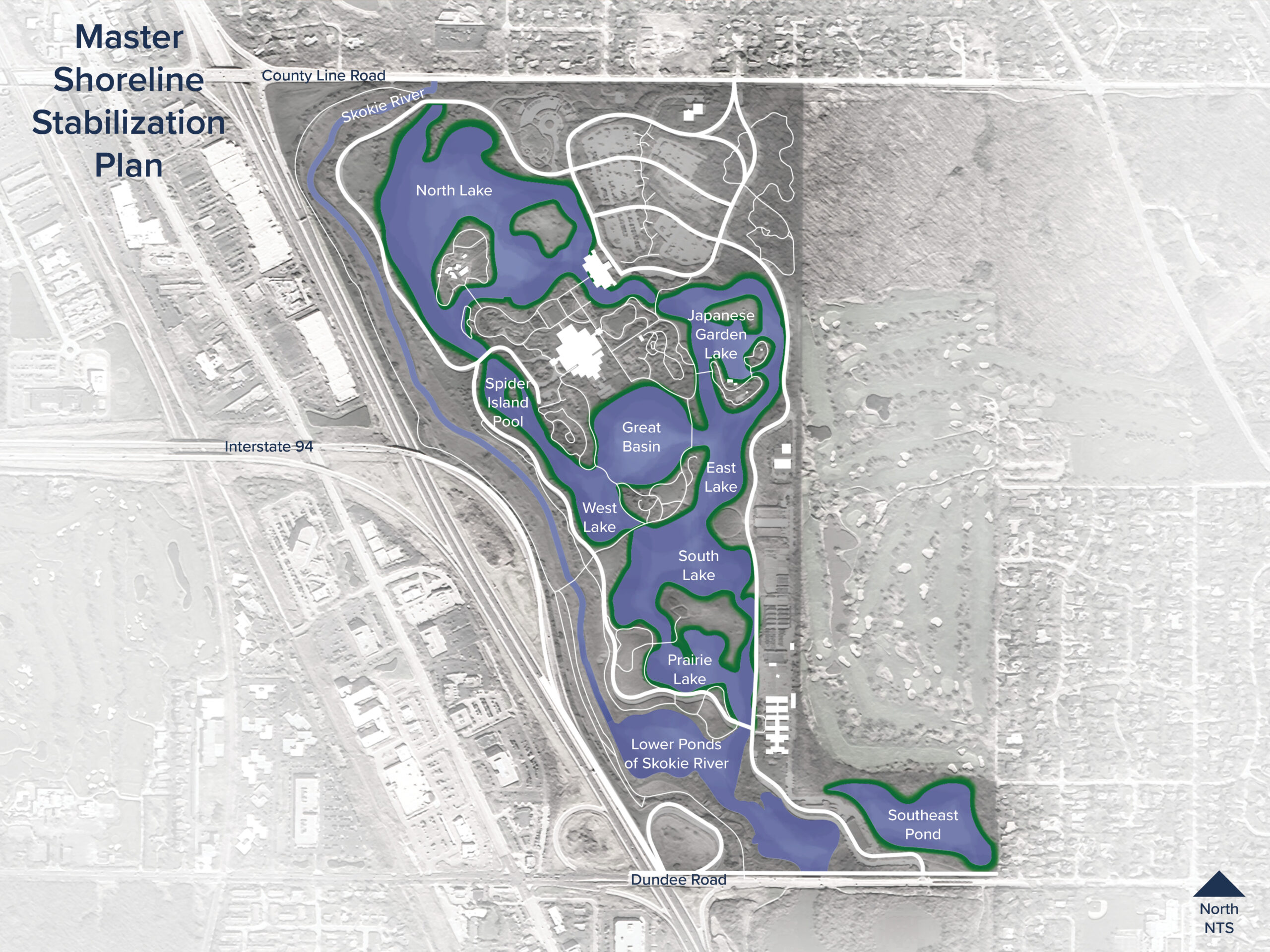
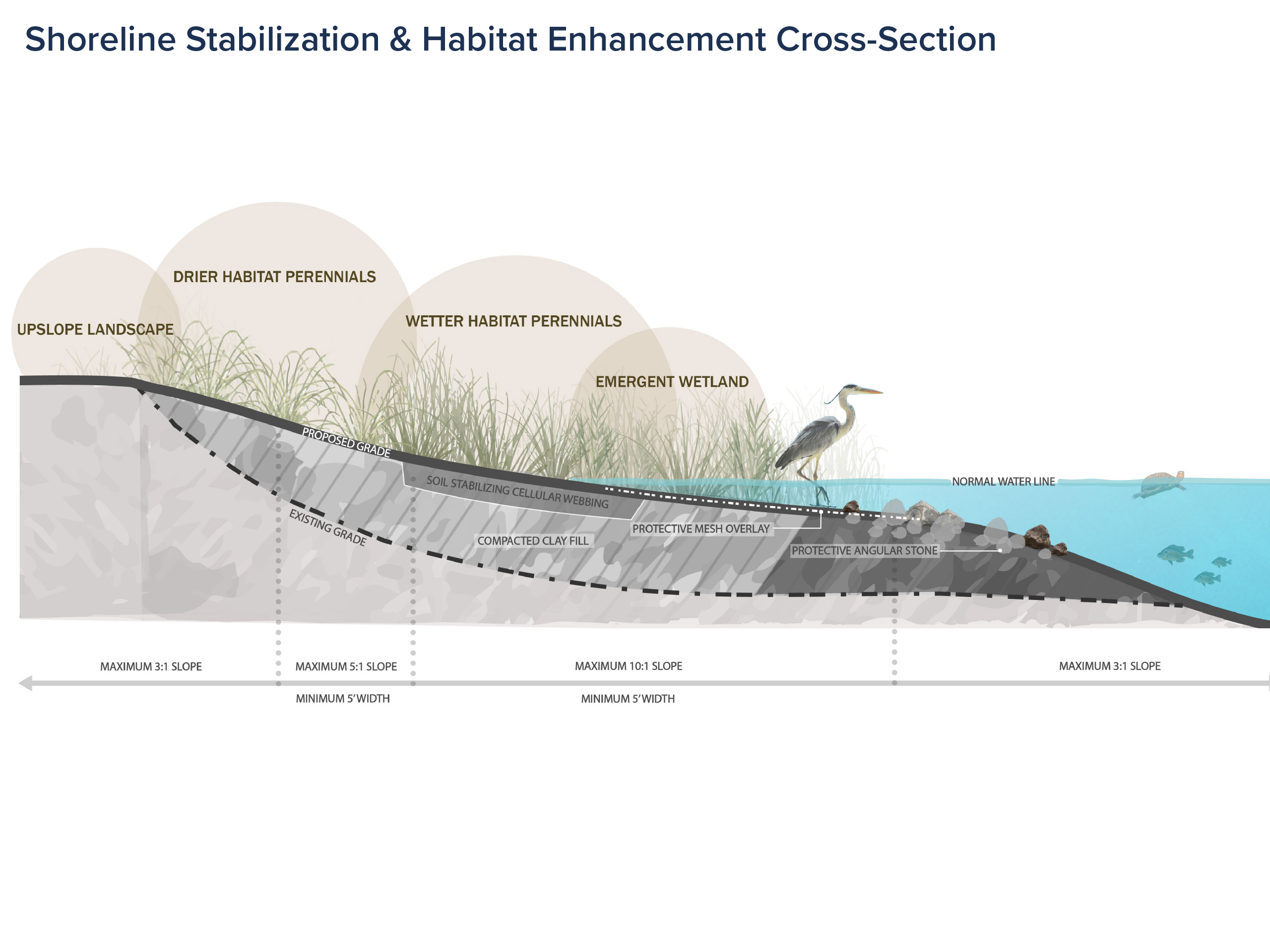
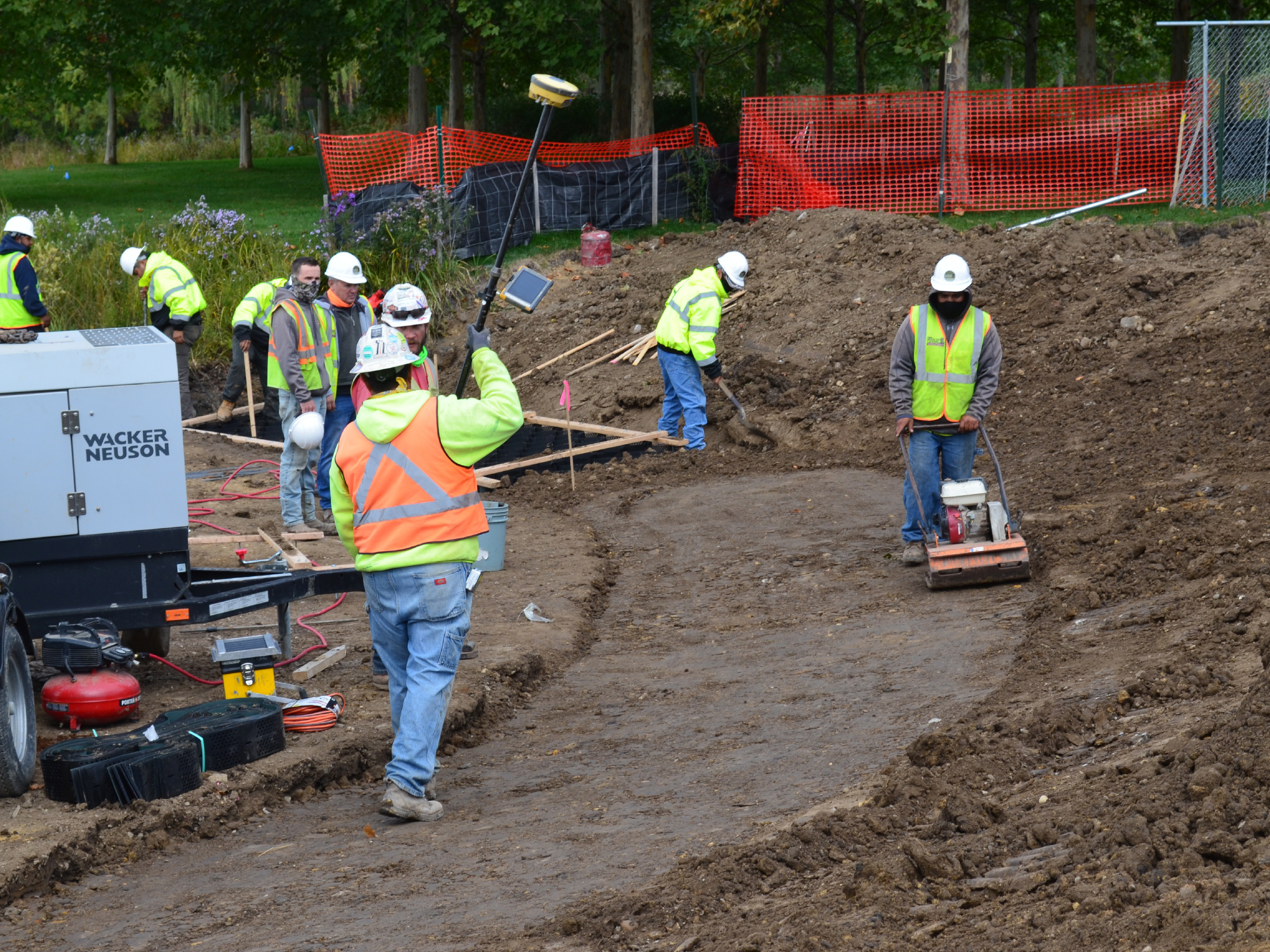
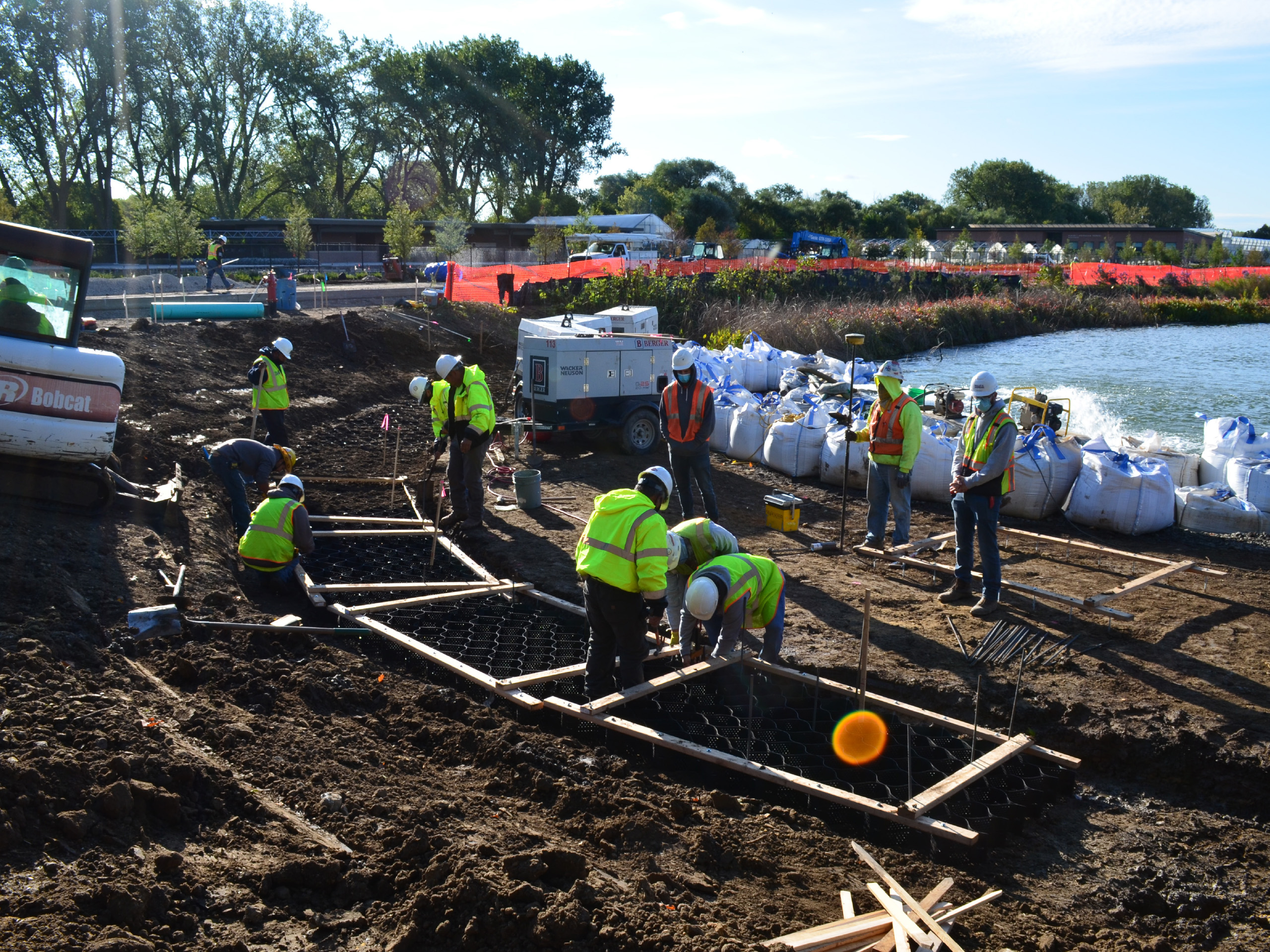
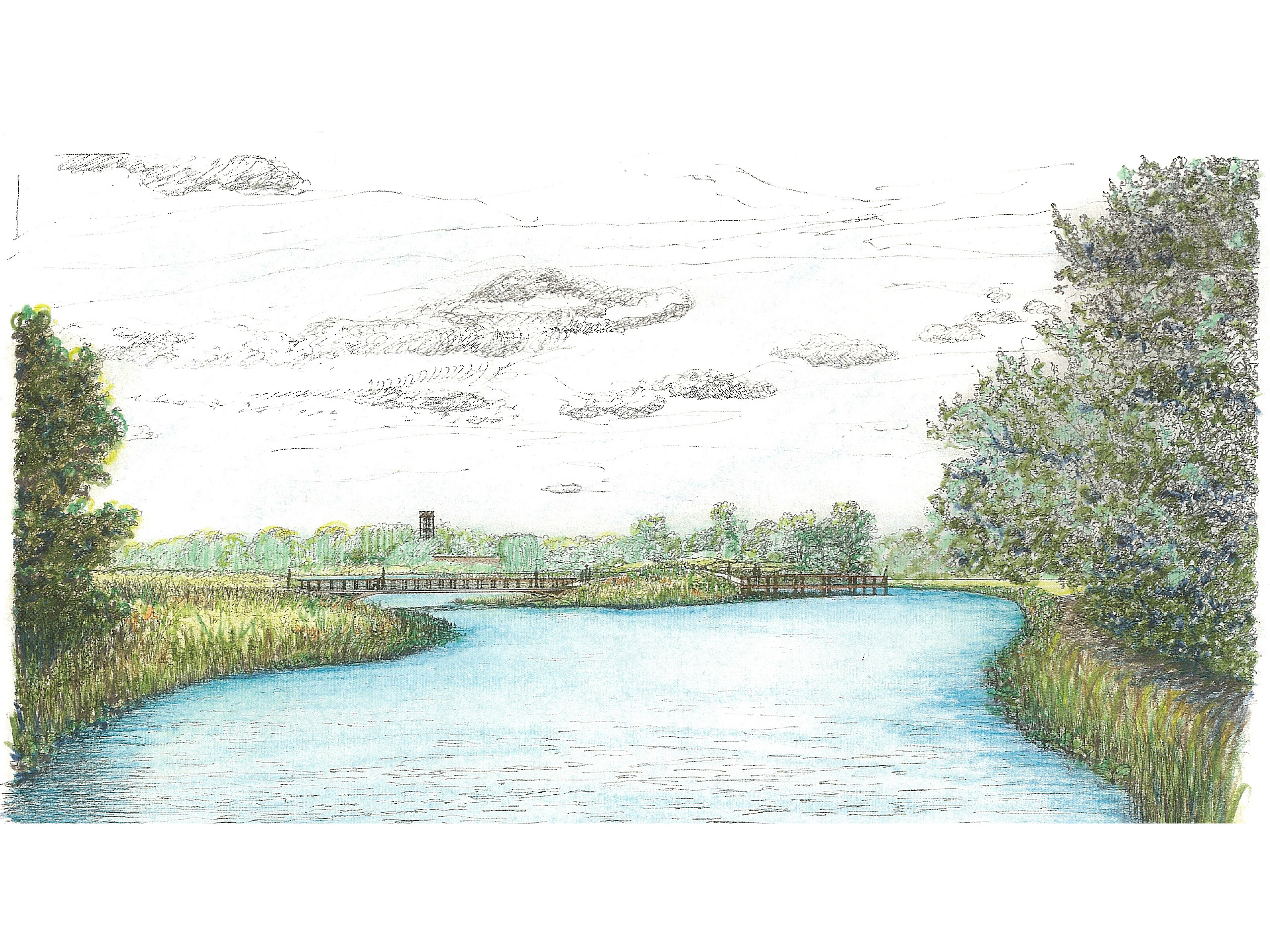
Living Habitats was engaged to spearhead this master planning, conceptual shoreline restoration design, and associated graphic and written documentation needed to both communicate the ideas, secure approvals, and ultimately implement the plan content. Working closely with Garden senior management and staff, a comprehensive Shoreline Restoration Master Plan was developed, including a tool kit of over 40 shoreline restoration treatment types that were assigned costs, allowing budgets to be developed for seven discrete project initiatives.
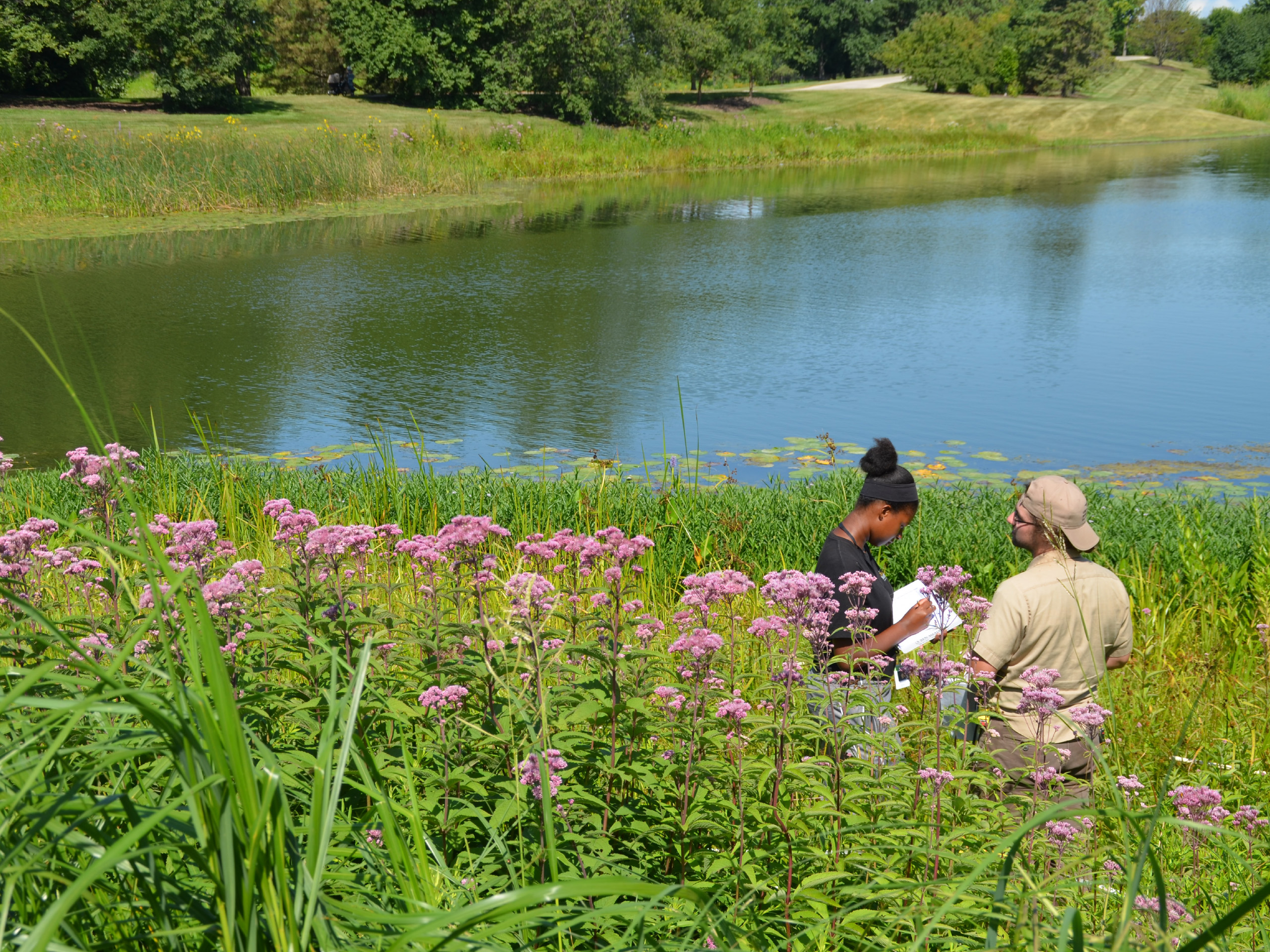
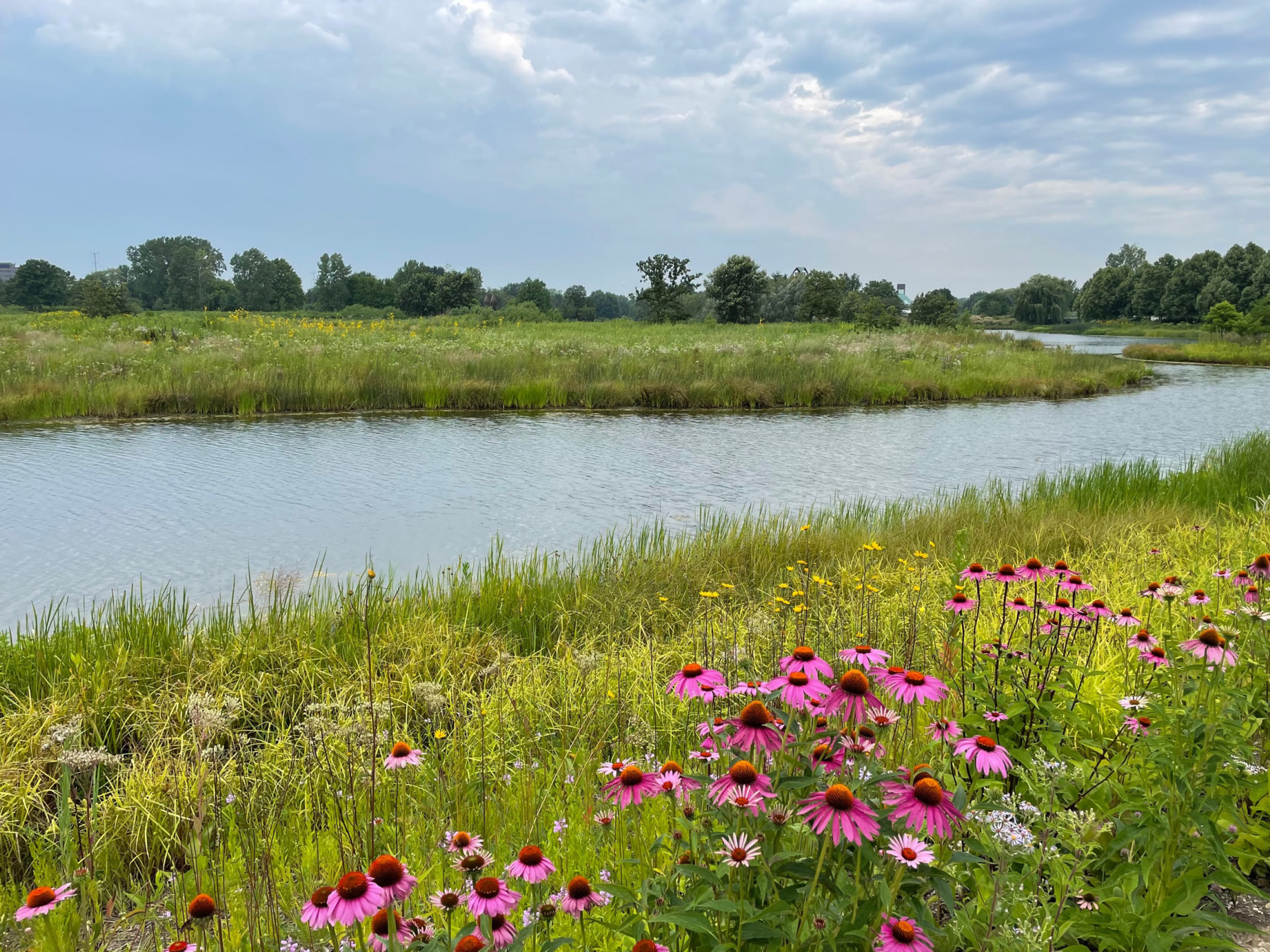
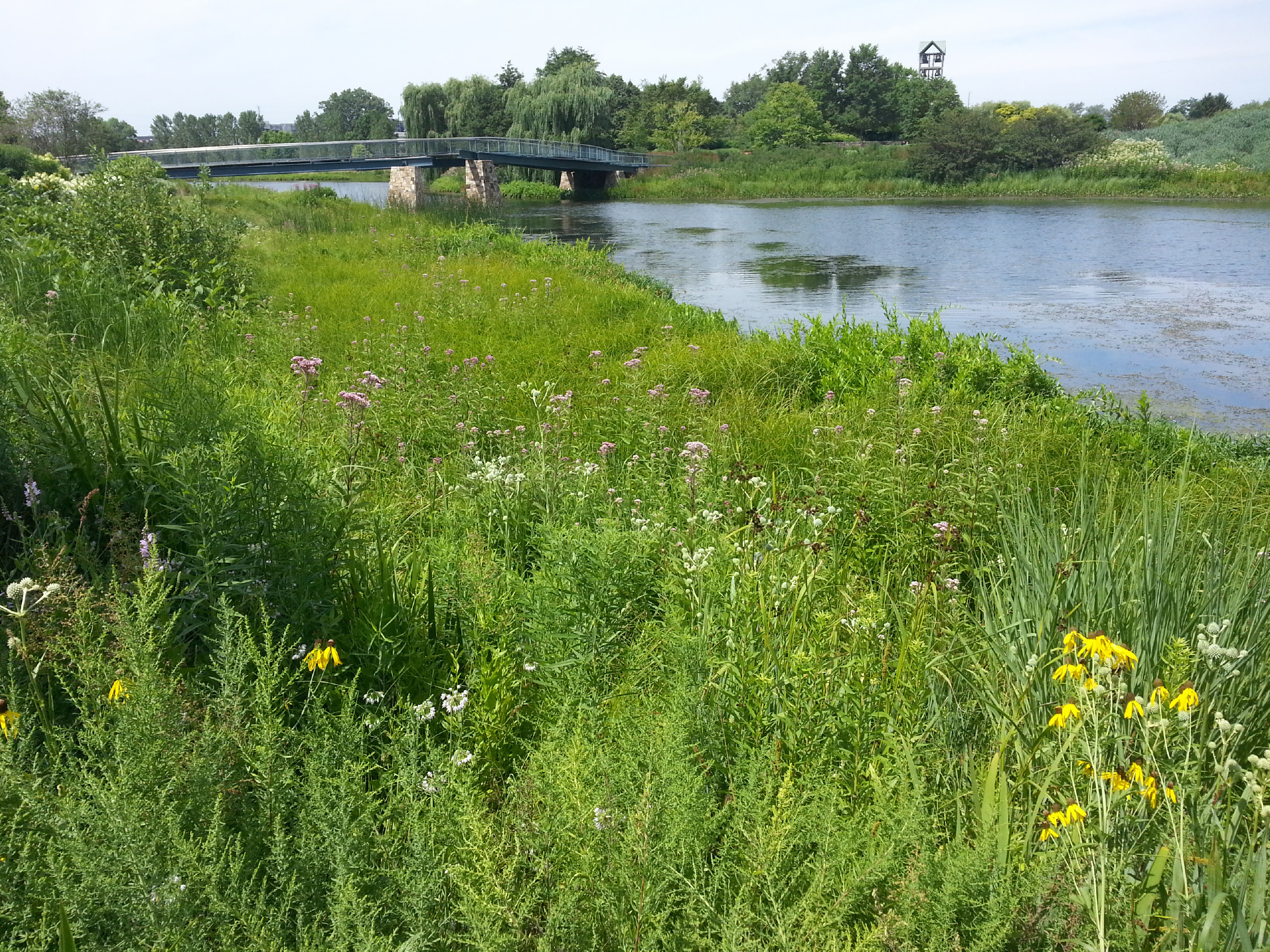
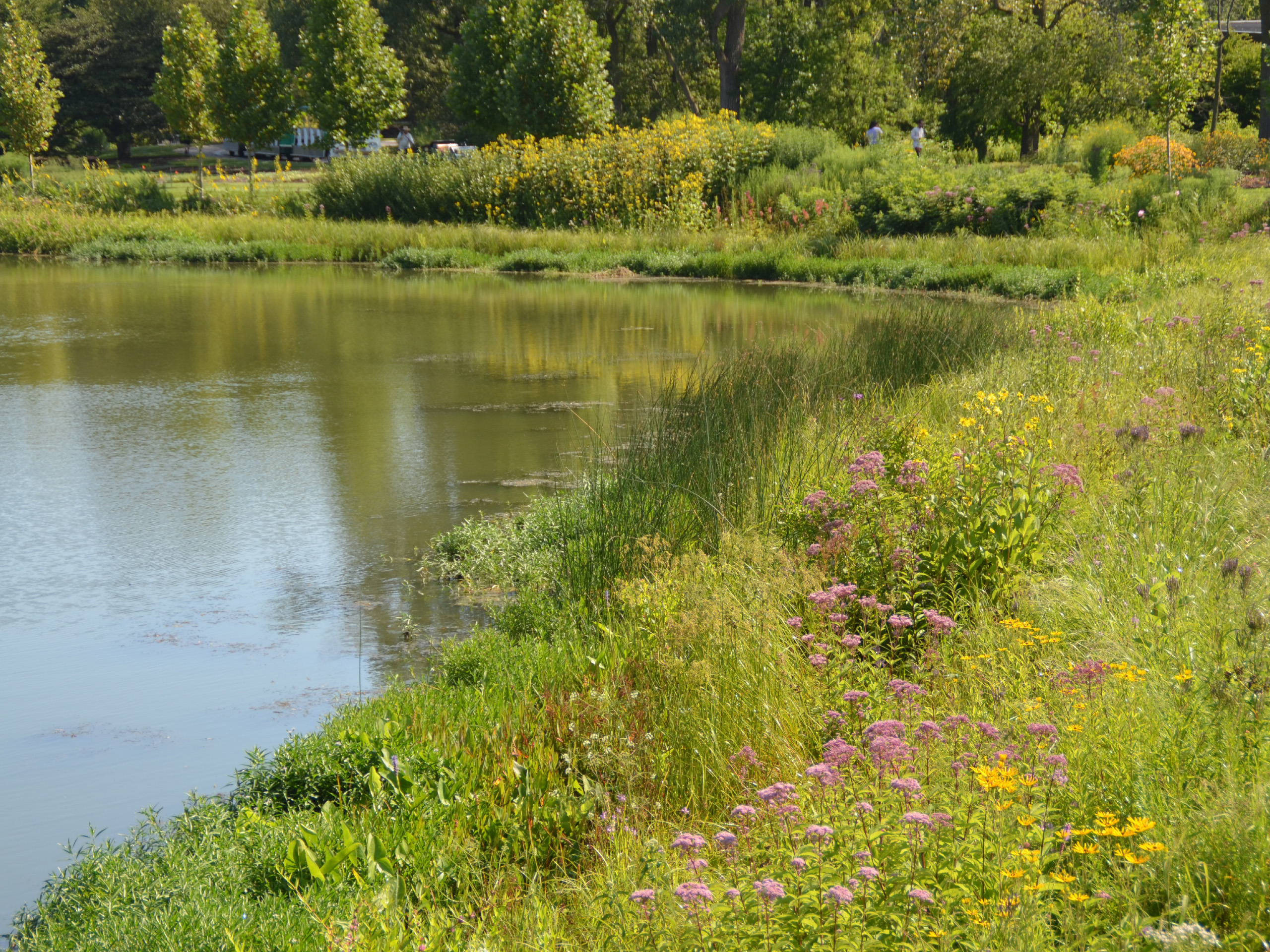
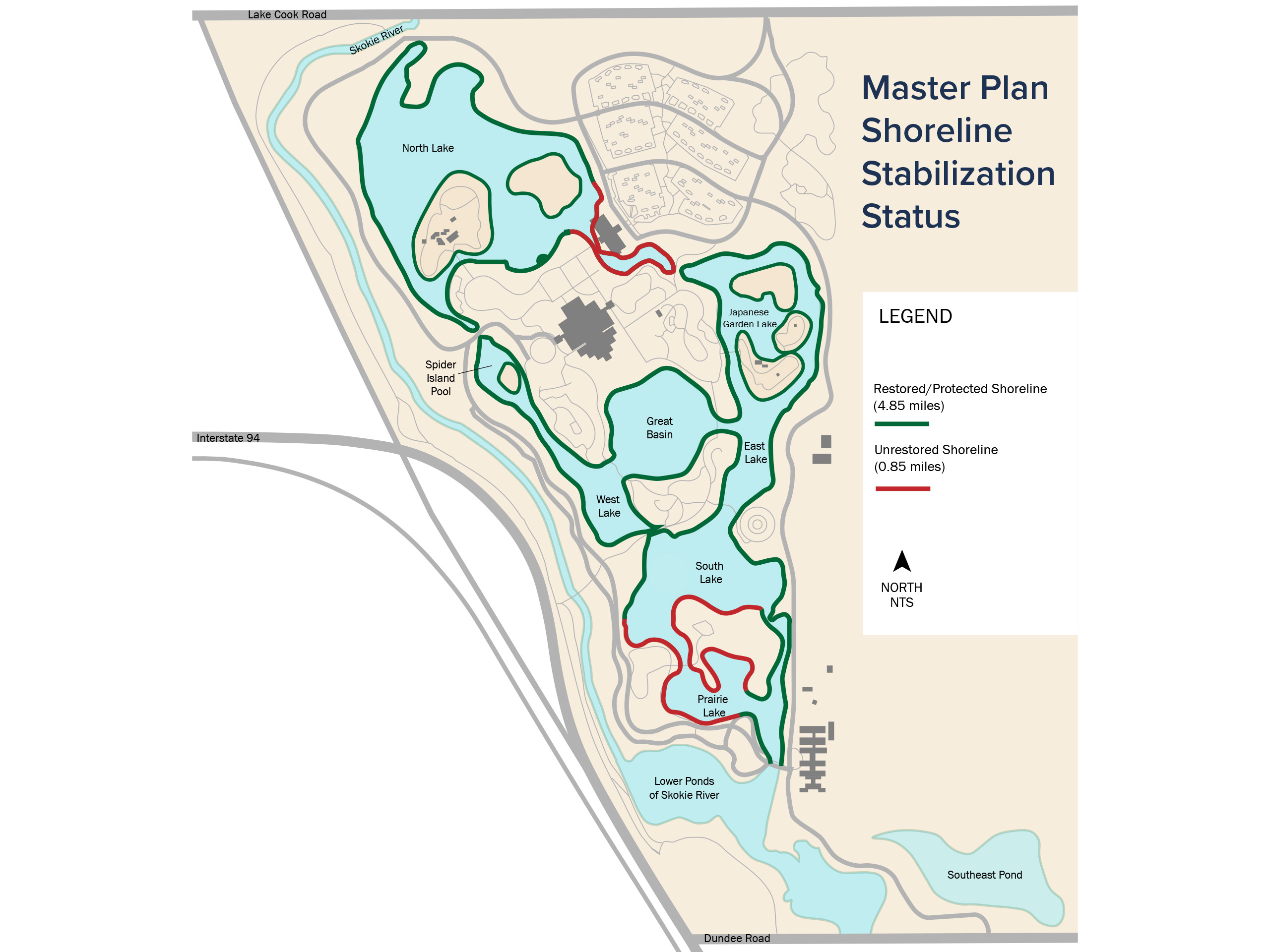
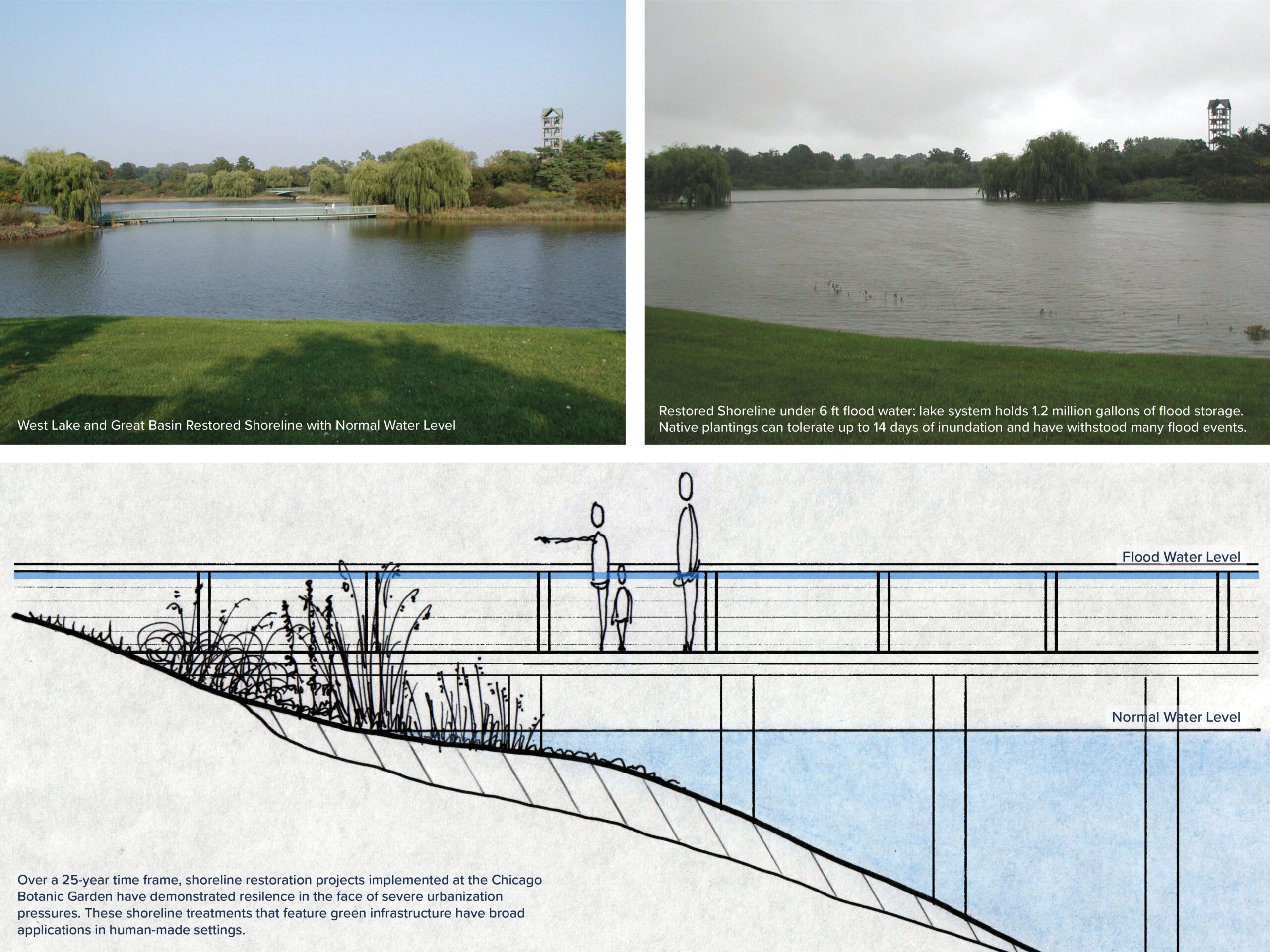
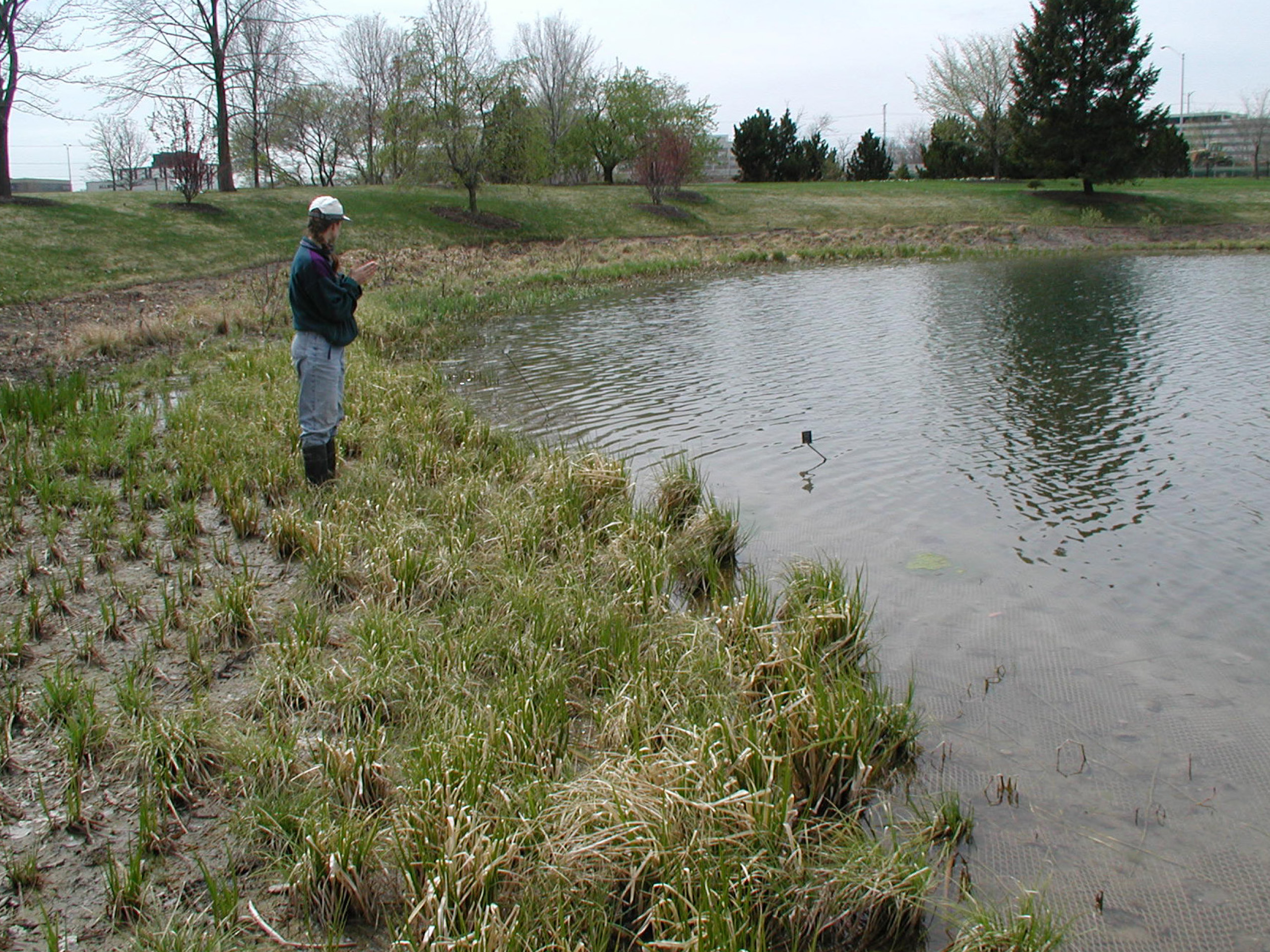
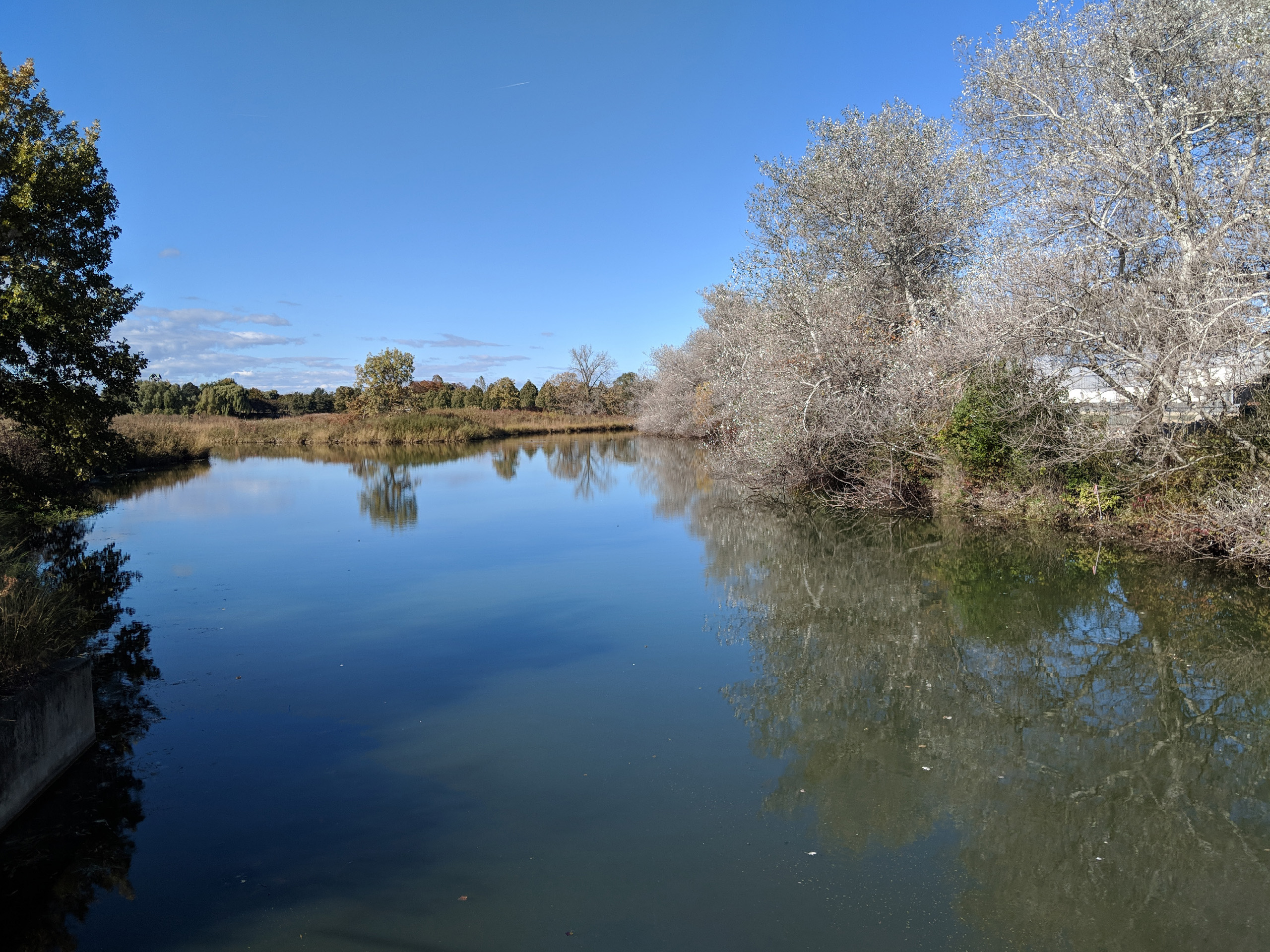
Master Plan documentation included graphics to support fund raising and recommendations for how the various solutions should be deployed along all the lake shorelines. To date, over five of the 5.7 miles of lake shoreline have been restored. After 20 years, construction of the Master Plan’s shoreline restoration recommendations is nearing completion. Under the Garden’s attentive stewardship, and with the expert application of native plants, these beautiful shorelines have been reliably delivering long term shoreline stability, offering massive flood mitigation, climate change buffering, water quality and habitat enhancements to the region’s inhabitants. Sharing their restoration work as part of their educational outreach, the Garden’s staff use their restored acreage to offer highly valued information to the region about successful long term urban lake management.
Location:
Glencoe, Illinois
Date:
2003 – 2005
Client:
Chicago Botanic Garden
Design Build Team:
PRIME: Living Habitats
FEATHERSTONE: Cost Estimating
Awards:
2014 Illinois Contractors Association Gold Award, Chicago Botanic Garden Shoreline Restoration
2005 & 2013 USEPA & Chicago Wilderness Conservation and Native Landscaping Award, Chicago Botanic Garden Shoreline Restoration
2013 Landscape Architecture Foundation, Landscape Performance Series Case Study , Chicago Botanic Garden Lake Shoreline Enhancement
2013 North American Lake Management Society, Chicago Botanic Garden Technical Merit Award for Lake Restoration, Protection and Management
2013 Illinois American Society of Landscape Architects Landscape Architecture Performs Publication, Chicago Botanic Garden Lake Shoreline
